
Look at these lovelies.
Flamingoes in Provence
Did you know that we have a lot of flamingoes in Provence? It’s not something that one would associate with the place of hilltop towns, olives, almonds, sunflowers, and lavender but that is my favourite thing about this region- it’s diversity.
From our location in Provence, close to St Remy, we can drive an hour in any direction and reach the sea, mountains, or lakes. Or, in this case, the salty marshlands of the Camargue known for their bulls, horseback riding prowess, and diverse bird wildlife.
The Camargue

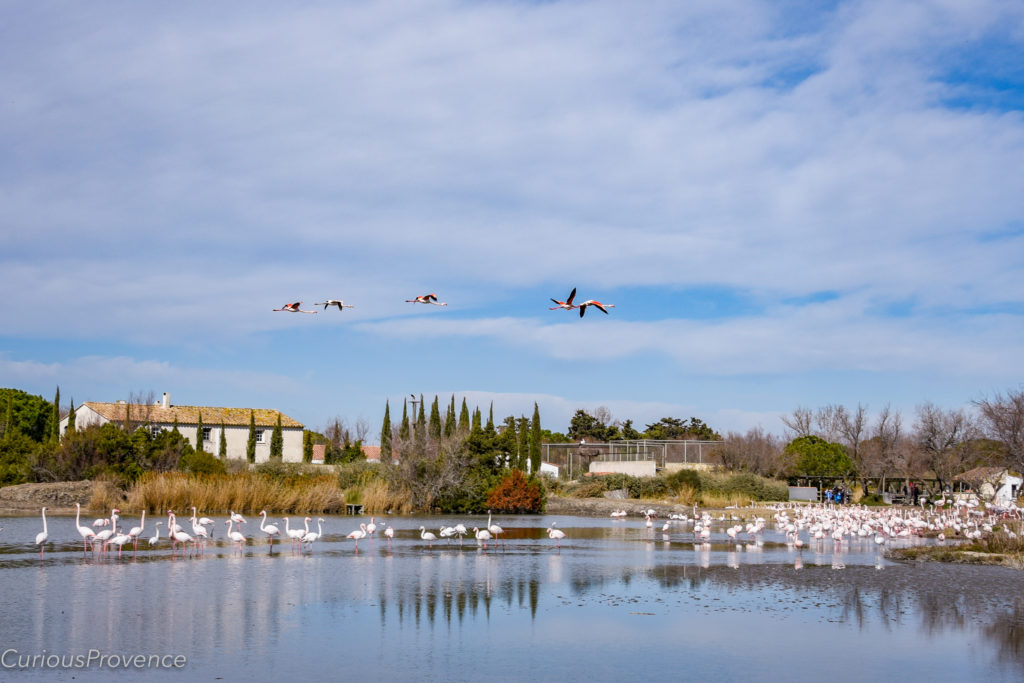
The Etang de Vaccerès in January.
The Camargue is a regional park and official nature reserve located south of Arles, between the Mediterranean sea and the Rhône delta. The vast plain is made up of saline lagoons and reed-covered marshes. The Camargue is Western Europe’s largest river delta.
The roads of these flatlands are dotted with little shops selling products directly from the farmers and low-key restaurants selling large steaks from the famous regional black cattle. Back from the road, you’ll notice large farmhouses. The locals are very proud of their tradition of mastering the art of horsemanship. This skill is still needed to corral the bulls that are raised here for meat and the Courses Camarguaises (French bull games). You can see the displays of this Provencal horsemanship all year long in such events as the Feria in Arles, the parade of May 1st in Arles, or various summer village bull running events.
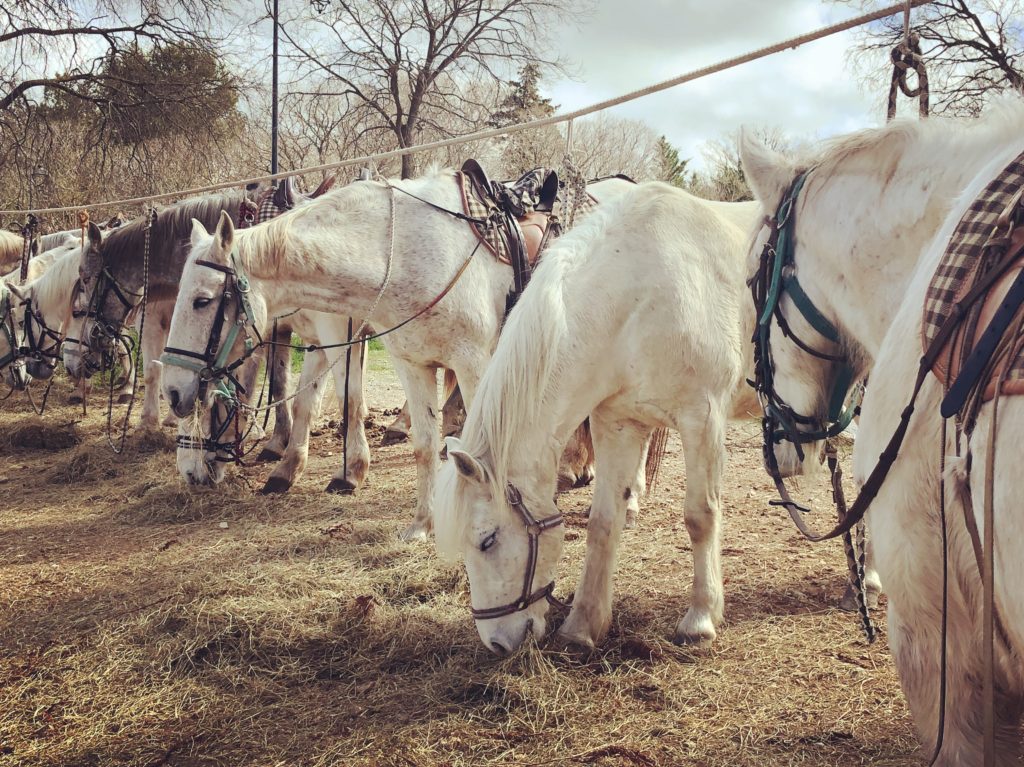
The native white Camargue horse.
Other products produced here are Camargue rice, wine, honey, and fruits and vegetables. Oh, and of course, the gardians. Or, French, elegant version of cowboys.
Parc Ornithologique

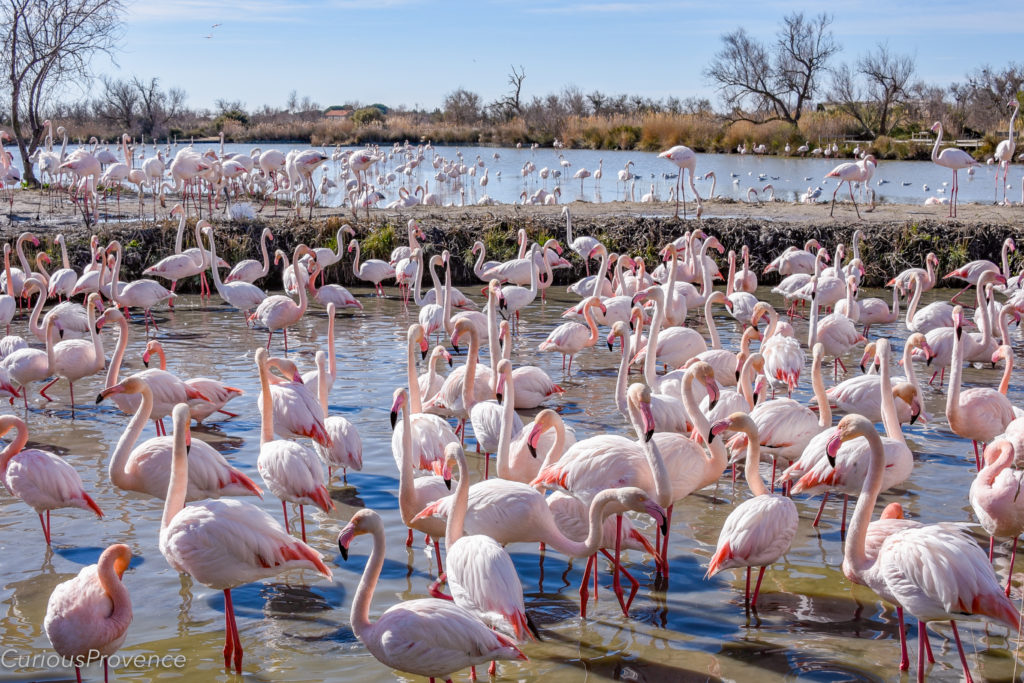
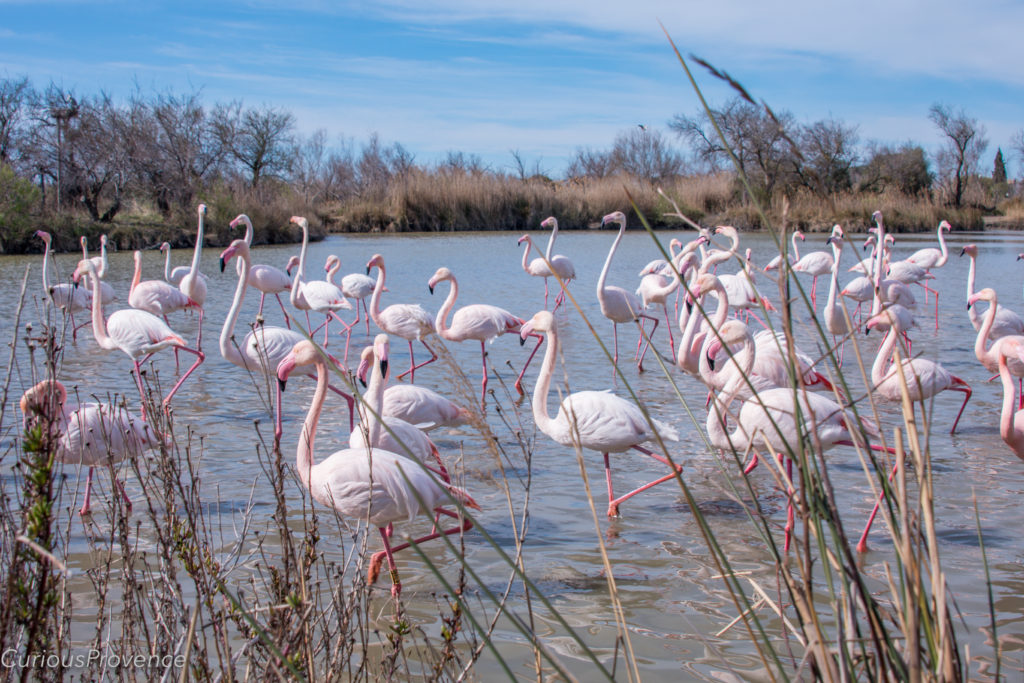
The Camargue national park has been recognized as a haven for wild birds, of which there are 400 species. You’ll notice lots of birds of prey and herons in the fields. But the best place to see the flamingoes in Provence is Parc Ornithologique.
Here you’ll find trails around marshlands that allow you a close view of the birds. To walk the entire path takes about 1.5 hours. There is also a shorter path that you may be able to take if the birds are all close to the entry area.

At this time of year, you should be able to see the mating dance of the flamingoes. I must say, that they are quite noisy! Click below to see a video I took when I was the first to arrive first thing in the morning.
All will be well until one fight breaks out and then they all seem to get in on it!

Practical Information for seeing the Flamingoes in Provence
Tickets: Adults 7,50 €, Kids 5 €
- There are no domestic animals allowed in the park.
- Bring a Picnic! There are lots of picnic tables along the paths overlooking the marshes.
- The exit of the parc is separate from the ticket office so you can leave late in the evening if you like.
- The park is open every day except the 25th of December. From April-September from 9am-7pm, October 1st to 31st of March 1Oam-6pm.
- There’s a little seating area where you can buy drinks that is open from April to October.
Address:

RD 570
13460 Stes Maries de la Mer
GPS: 43°29’21’’ N 4°24’14’’ E
The Mosquitoes
Due to the marshlands, the Camargue has a large number of mosquitoes. This is why I would suggest going now, in the early spring, to avoid them. The best tips that I can offer are to cover up, wear mosquito repellent, and visit the Camargue on a somewhat windy day. This makes a big difference. In fact, whenever the famous Mistral wind of Provence is blowing people say “well, at least there aren’t any mosquitoes.”


Path at the Parc Ornithologique where you’ll find flamingoes right next to the path as well as discreet bird observatories.
Other Wildlife
To see a full guide to the flora and fauna of the Camargue, visit the Camargue Museum. There may not be lavender, but there is sea lavender!
At the Parc Ornithologique, you can see all kinds of other wildlife other than birds such as ragondin, frogs, lizards, foxes and more.

I think these are cute, but they are of course part of the rodent family. This is a mum and baby Ragondin, or Coypu in English.

These thistles used to be a responsible for an important part of the textile industry here. They were used to comb out sheep wool. Learn more at the Musée des Alpilles in Saint Remy de Provence.

Not Florida baby, Provence!


